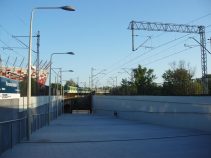
PKP Polskie Linie Kolejowe S.A. (PKP PLK) (Polish State Railways) use composite lighting poles as part of its railway infrastructure modernisation programme, recognising the unique advantages of composite technology. These poles are installed at railway stations, platforms, level crossings, and pedestrian underpasses, providing a modern alternative to traditional concrete and steel lighting poles.
Why composite lighting poles?
Composite lighting poles offer several important benefits for railway infrastructure:
- Outstanding durability – highly resistant to corrosion, moisture, temperature fluctuations, and a wide range of chemicals, ensuring reliable performance in demanding railway environments.
- Improved safety – their lightweight construction and controlled energy absorption help reduce the severity of impacts in the event of a vehicle collision, particularly at railway level crossings.
- Fast and efficient installation – their low weight simplifies transportation and installation, reducing project time and installation costs compared with conventional concrete or steel poles.
- No grounding required – selected models, such as the SKPW series installed directly into the ground, do not require additional grounding, simplifying installation and accelerating project delivery.
Approved for railway applications
Composite lighting poles supplied by Polish manufacturers such as NCT S.A. / Alumast are approved for use within the PKP PLK railway network, demonstrating compliance with the stringent technical and safety requirements applicable to railway infrastructure.
By combining durability, safety, and installation efficiency, composite lighting poles provide a reliable, long-term solution for modern railway infrastructure projects.
