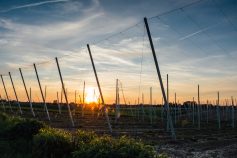
Modern hop farms are increasingly looking for solutions that can improve the durability of their infrastructure, increase work safety, and support more efficient production. One of the technologies gaining attention in modern agriculture is the use of composite structural poles developed by NCT SA, designed specifically for demanding farming conditions.
Composite poles for modern hop trellises
Hop cultivation requires support structures that can withstand many years of exposure to challenging outdoor conditions. Moisture, UV radiation, changing temperatures, fertilisers, and plant protection products can all affect traditional materials over time.
Composite poles offer excellent durability in these environments thanks to their unique material properties:
- high resistance to harsh weather conditions,
- resistance to chemicals and UV radiation,
- no corrosion and high resistance to biological degradation.
As a result, composite support structures maintain their performance and appearance for many years, reducing the need for maintenance and costly repairs.
A sustainable alternative to traditional wooden poles
NCT SA provides complete composite support structures for hop trellises, offering a modern alternative to traditional wooden poles treated with creosote.
The use of composite materials brings several important advantages:
- eliminates the need for materials containing harmful substances, including polycyclic aromatic hydrocarbons (PAHs),
- supports more environmentally responsible farming practices,
- ensures long-term durability and structural stability throughout the entire service life.
Composite hop trellis systems respond to the growing demand for sustainable agricultural solutions that combine reliability, safety, and environmental responsibility.
Lightweight construction, easier installation, and long-term durability
Hop trellises use different types of support poles, including corner, end, and intermediate poles. Even existing trellis systems based on concrete or wooden poles can be gradually modernised by replacing selected intermediate poles with lightweight composite alternatives, without the need to replace the entire structure.
The main advantages of composite poles include:
- an 8-metre pole weighing approximately 27 kg
(compared with 130–150 kg for wooden poles and 900–1,100 kg for concrete poles), - quick and safe installation without heavy equipment,
- easier transport and handling during installation,
- excellent resistance to moisture, weather conditions, and agricultural chemicals,
- very low maintenance requirements throughout the entire lifecycle.
Their lightweight design also makes future expansion, modification, or adaptation of hop trellis systems much easier.
Infrastructure ready for smart farming
Composite poles can become more than just structural elements. Their design allows them to support modern monitoring and smart agriculture technologies.
They can be equipped with:
- environmental sensors,
- camera and image analysis systems,
- power supply components such as photovoltaic panels or small wind turbines.
Combined with Internet of Things (IoT) solutions, these systems enable the collection and analysis of data in the cloud. This helps growers identify potential threats, such as pests or diseases, and optimise growing conditions to improve crop performance.
Composite materials supporting the future of hop farming
The use of composite poles in hop cultivation combines advanced materials, modern engineering, and digital technologies to create a new approach to agricultural infrastructure.
By improving plantation durability, increasing work safety, and reducing maintenance needs, composite trellis systems support more efficient and sustainable farming.
They are an example of how traditional agriculture can successfully benefit from modern material technologies and smart solutions designed for the challenges of the future.
