The Government Road Development Fund was established in 2018. Its purpose is to improve road safety, enhance the technical standards of local road networks and increase the attractiveness and accessibility of investment areas. Funding from the RFRD is awarded through competitive grant programmes.
“Looking at the projects implemented under the RFRD in previous years, we can see that local authorities and designers approach these investments responsibly and with careful consideration,”
says Jarosław Schabowski, Management Board Representative at NCT S.A., Director for Road Safety and Composite Development.
“This is extremely important because when planning projects designed to ensure high quality and reliable performance over many years, decision-makers must carefully select the most effective technological and material solutions. The objective is not simply to illuminate roads or construct new pedestrian crossings, but to achieve a genuine improvement in the safety of all road users,”
emphasises the expert.
What should be considered when looking for the most effective solutions, and what factors deserve particular attention? Jarosław Schabowski highlights five key areas: safety, durability, cost efficiency, sustainability and innovation. All of these aspects are carefully considered and analysed throughout the design and manufacturing process of NCT S.A.’s most advanced composite lighting columns.
Safety Comes First
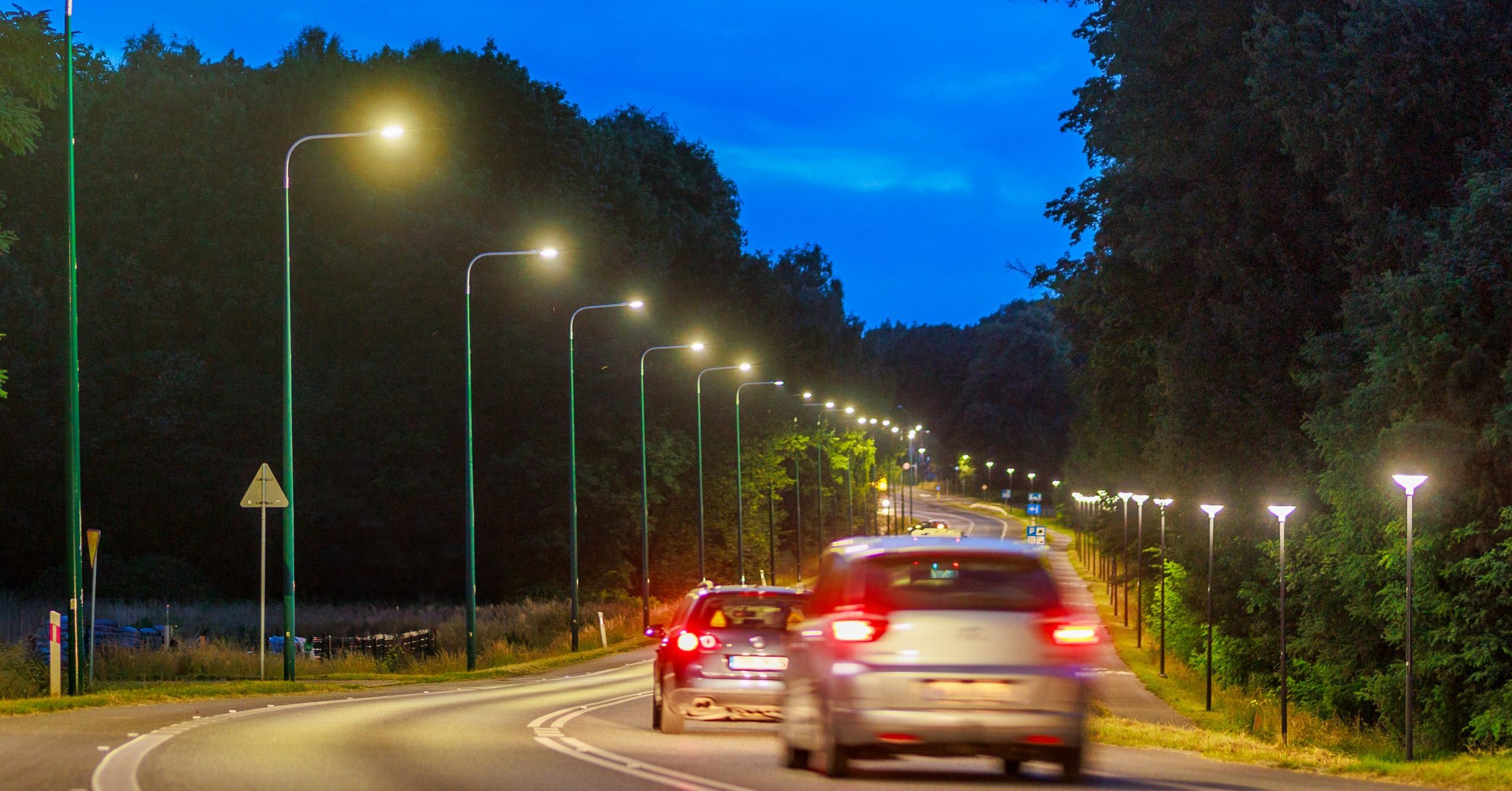
“Composite lighting columns have a significant advantage over columns made from traditional materials thanks to their ultra-lightweight construction. Another key feature is their exceptional ability to absorb impact energy during a vehicle collision, significantly reducing the consequences of an accident. Additionally, glass fibre-reinforced polyester composites do not conduct electricity, which is also crucial in the event of a vehicle impact. This further enhances the safety of electrical maintenance personnel by protecting them against electric shock,”
explains Jarosław Schabowski.
Unfortunately, many concrete lighting columns are still present along Polish roads and in urban areas. Their performance does not meet the passive safety parameters defined in the PN-EN 12767:2019 standard.
NCT S.A. offers lighting columns tested across all speed classes and passive safety categories in accordance with this standard. Particular attention should be given to the unique Passivepole columns, which are tested at a vehicle speed of 50 km/h. During a collision, they safely fold down in front of the vehicle without detaching from their foundation – representing the non-separating (NS) class.
Composites – Unmatched Durability
When it comes to publicly funded investments, the durability of the materials used in a project is a key consideration. Composite materials stand out in this area, as they are resistant to corrosion, flame-retardant, and highly resistant to mechanical damage, road and marine salt, as well as animal-related contamination.
Composites perform exceptionally well in demanding environments thanks to their high mechanical strength, including resistance to seismic activity, vibrations and strong wind loads, as well as their ability to withstand both high and low temperatures. They are also characterised by exceptional longevity, with a service life of up to 40–50 years. This makes them particularly valuable for urban and local government infrastructure projects where long-term reliability is essential.
Modern, Durable and Cost-Effective
Local authorities are well aware that when planning investments aimed at improving road safety, it is essential to consider not only technical parameters but also economic factors. The total cost of an investment includes not only construction expenses but also additional elements such as transportation of structures and the need for supplementary safety equipment, which can significantly increase overall costs.
Composite lighting columns are a good example of a solution that combines safety and cost efficiency. Since they meet passive safety requirements, there is no need to install protective barriers around them to improve road safety. This can result in savings of more than 57% in the lighting system budget of road infrastructure projects, explains the NCT S.A. expert.
The cost of transporting and installing the complete lighting system is also highly significant. In the case of direct-buried composite lighting columns, there is no need for heavy concrete foundations, which typically weigh around five times more than a 9-metre-high column itself. As a result, delivering columns together with foundations to the construction site requires significantly more transport operations compared to the installation of direct-buried composite columns.
Furthermore, the installation process does not require heavy machinery for unloading and positioning foundations together with the columns, which further reduces project costs and simplifies execution.
Thinking About the Future? Think Green!
In the context of climate change, evolving legal requirements and the pursuit of sustainable development by local authorities, long-term investments are increasingly assessed from an environmental perspective. The infrastructure installed in our communities also has an impact on the natural environment. Glass fibre-reinforced polyester composite is a material that is 100% recyclable and generates lower CO₂ emissions during production compared to traditional materials.
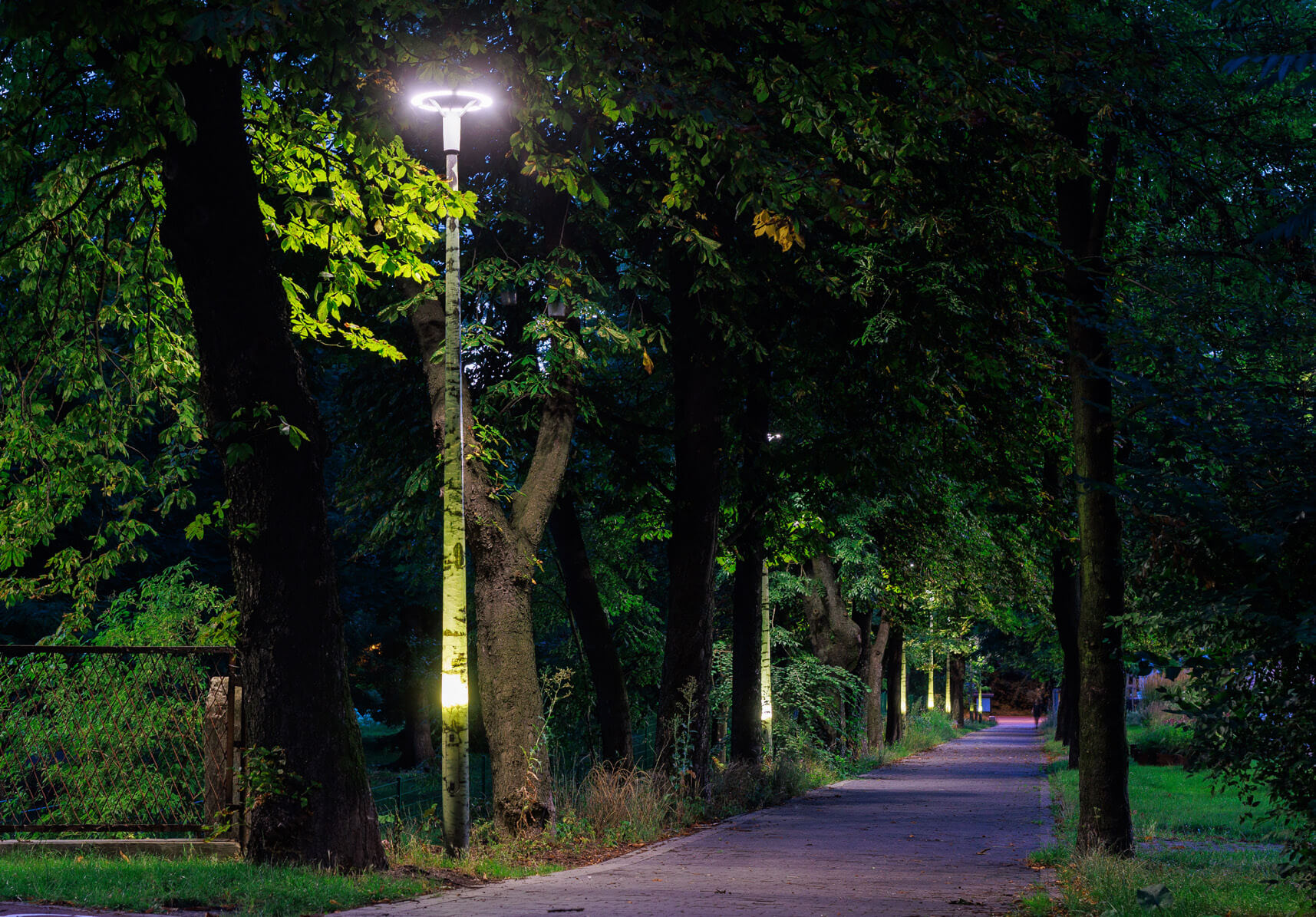
Additionally, solutions such as Designpole lighting columns provide practical support in reducing light pollution. Thanks to their integrated internal illumination, Designpole columns create an attractive visual effect while also providing excellent visual guidance without the need to activate the main lighting fixtures. This allows the primary light source (LED luminaire) to be switched on only during late-night hours or according to the specific needs of the investor, reducing unnecessary energy consumption while maintaining safety and comfort in public spaces.
Investments and Innovation – A Perfect Combination
Today’s possibilities and needs differ significantly from those of just a few decades ago. In the past, lighting columns served a single purpose; today, they can perform many additional functions. This is made possible by the use of advanced materials that enable the implementation of smart city solutions, such as integrating receivers and radio transmitters inside lighting columns. Composite materials do not absorb or interfere with radio waves, making them an ideal solution for such applications.
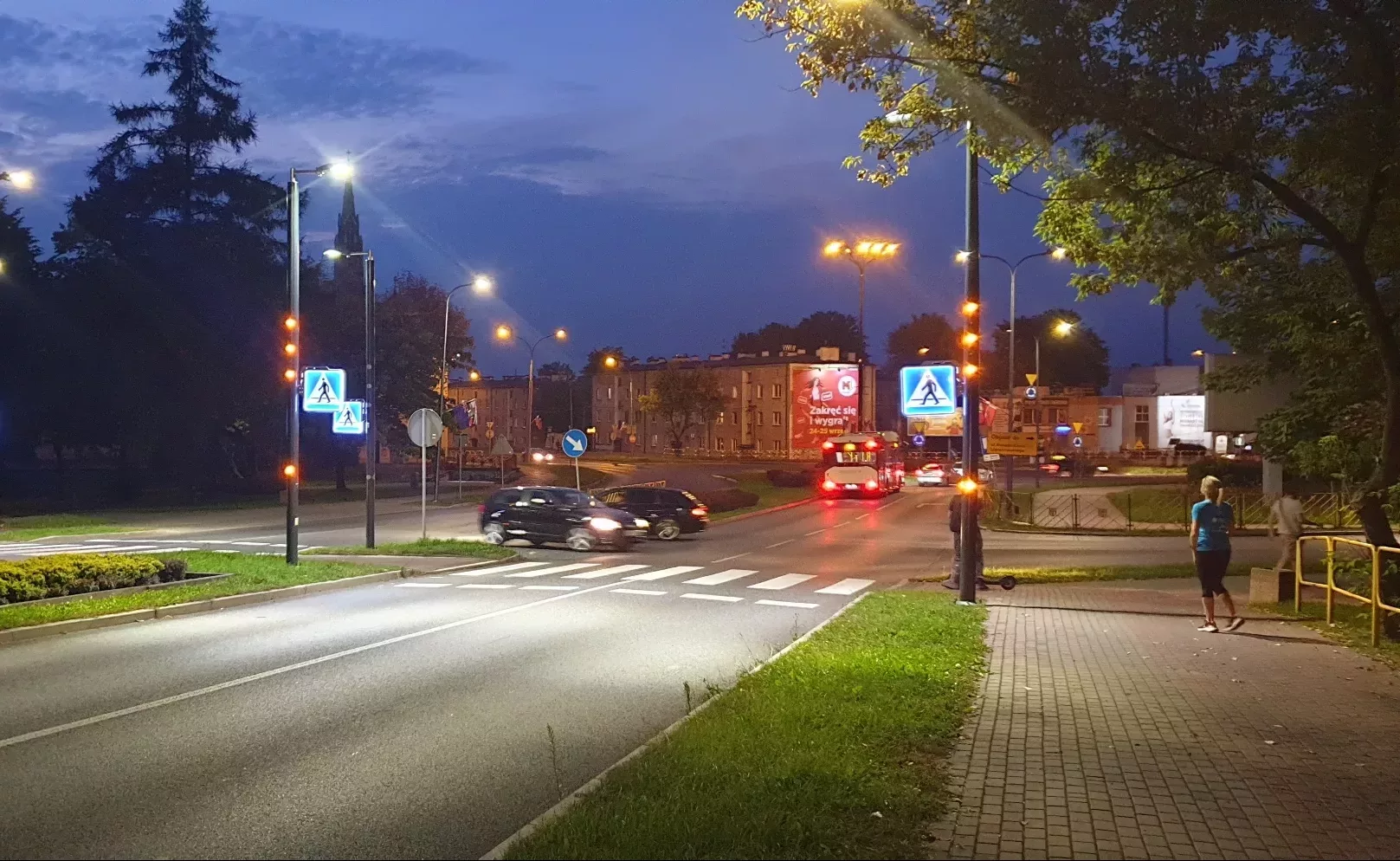
“We fully embrace the technological opportunities offered by composite materials,” says Jarosław Schabowski. “This can be clearly seen in systems such as Smartpole Crossing – active and safe pedestrian crossings. By incorporating modern electronic systems, including motion detectors, as well as acoustic and visual warning signals, drivers receive effective information when approaching a pedestrian crossing where a pedestrian has entered or intends to enter the roadway,” explains the NCT expert.