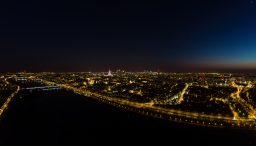
Although smog is most commonly associated with air pollution, there is another, equally concerning form of this problem known as light pollution. It is caused by excessive, uncontrolled and improperly distributed artificial light from street lighting, advertising and commercial sources. While it may appear to be a harmless phenomenon, it has significant consequences for human health, the environment and energy consumption.
Light pollution, also referred to as artificial light pollution, is the excessive presence of artificial light in the environment. It can cause light to scatter in the atmosphere, creating brighter night skies and disrupting natural cycles of light and darkness. Light pollution is not only the result of excessive illumination but also of inappropriate lighting choices and a lack of effective regulations governing urban and industrial lighting systems.
The Effects of Light Pollution
- It can disrupt the natural day–night cycle, leading to sleep disturbances and health problems.
- Long-term exposure to excessive artificial light at night may increase the risk of conditions such as insomnia and depression.
- Light pollution affects plants, animals and entire ecosystems. Many species of birds and insects rely on natural darkness for navigation, feeding and survival. Excessive artificial light can disorient wildlife and disrupt ecological balance.
- Light pollution also represents a significant waste of energy and financial resources, contributing to higher energy costs for both residents and businesses.
Unfortunately, despite the fact that light pollution is increasing year by year, public awareness of this issue remains relatively low. Efforts to change the way society approaches light pollution are being supported, among others, by experts from the Polish Light Pollution Think Tank (LPTT). The organisation brings together researchers from universities and scientific institutions, representatives of local authorities and members of non-governmental organisations (NGOs). Its mission is to inspire, initiate and support actions aimed at reducing light pollution while remaining aligned with the principles of sustainable development.
Light Pollution – A Growing Problem Affecting Increasingly Large Areas
In 2023, the Polish Light Pollution Think Tank (LPTT) prepared a report entitled Light Pollution in Poland. It was the first document in Poland to provide a comprehensive assessment of the scale of light pollution in the country (based on data from the end of 2022). The report was based on indicators measuring the amount of artificial light emitted into space and the brightness of the night sky.
The findings presented in the report are highly concerning:
- Light pollution is widespread in Poland and continues to increase. The amount of light emitted into the sky in 2022 was the highest recorded in the history of measurements and was 6% higher than the average recorded during the decade 2012–2021.
- In 2022, the night sky in Poland was on average 147% brighter than a naturally dark sky, while in urban areas it was several thousand times brighter.
- For 20% of Poland’s population, the night sky was so bright that people could no longer experience the feeling of true darkness. The issue also affects national parks, particularly those located close to major urban areas.

Unfortunately, light pollution is still not recognised as a threat within the Polish legal system, and efforts to protect natural darkness undertaken in 2022 were largely informal and community-driven. According to experts from the LPTT group, effective action requires, among other measures, the introduction of appropriate legal regulations, greater public education on the issue of light pollution, and the implementation of efficient street lighting solutions.
NCT Designpole Supports the Reduction of Light Pollution
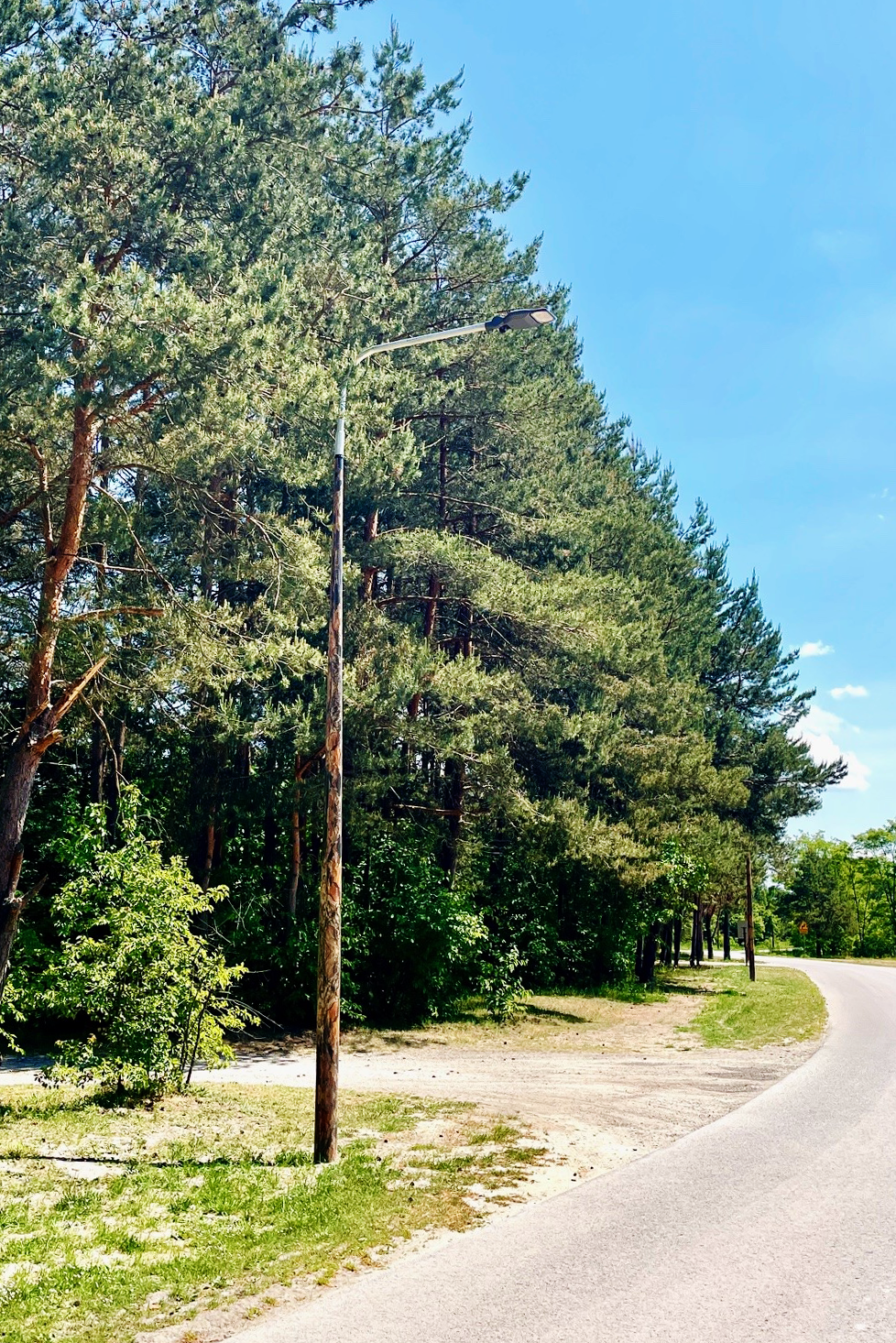
For NCT S.A., the issue of light pollution is an important area of focus. In response to this challenge, we developed Designpole – a collection of composite lighting columns featuring stylish graphics and integrated internal illumination. This solution combines thoughtful urban aesthetics with a commitment to protecting the natural environment, helping to create more sustainable and responsible lighting solutions for modern public spaces.

“From the perspective of light pollution, the key feature is the integrated ambient lighting built into Designpole columns. Its low power consumption is sufficient to provide visual guidance in parks, public squares, and along cycle paths without the need to switch on the main luminaire. This allows the amount of emitted light to be significantly reduced while lowering electricity consumption by up to 45%,”
explains Jarosław Schabowski, Management Board Representative and Director of Road Safety and Composite Development at NCT S.A.
“How did we calculate this? We assumed that the average power consumption of a park luminaire is 55 W, while the integrated lighting in a Designpole column consumes just 3–5 W. On average, lighting systems operate for around 10 hours per day throughout the year—approximately 14 hours per day during autumn and winter, and around 8 hours during spring and summer. Based on these assumptions, a conventional lighting column consumes approximately 218.3 kWh of electricity per year,”
he explains.
As Jarosław Schabowski further notes, the operating time of the main luminaire can be reduced even further by using motion sensors that activate full lighting only when a pedestrian is detected. In this scenario, the main luminaire operates for just four hours per day, while the integrated ambient lighting remains on for the remaining six hours.
As a result, the total daily energy consumption of the system is reduced to approximately 270 Wh per day (240 Wh for the main luminaire and 30 Wh for the integrated column lighting). Over the course of a year, this translates into electricity consumption of approximately 98.5 kWh, compared with 218.3 kWh for conventional operation—representing energy savings of up to 45%.